I'm a fan of any book that encourages kids to express themselves without self-consciousness, especially when it comes to writing. Larsen's approach is excellent. This book tells kids that there is no wrong way to tell a story, that even non-readers can write their own story. In the vein of Peter Reynolds' The Dot, this is a story of creativity without limits. This would be a great book to use in a group setting with kids of any age as a lead in to non-traditional story telling. I'd love to walk middle graders through the process of writing a story entirely with symbols.
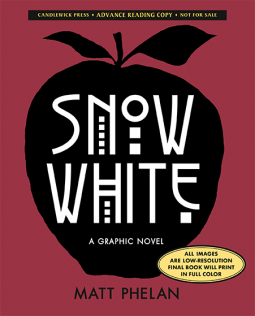
Title: Snow White Author: Matt Phelan Genre: fairy tale, graphic novel Similar books: Rapunzel's Ravenge by Shannon Hale Fairy Tale Comics edited by Chris Duffy The Diviners by Libba Bray (I know this seems like an odd choice, but the atmosphere is similar) Rating:
artfully done - one to read and reread
Summary (provided by publisher): The scene: New York City. The dazzling lights cast shadows that grow ever darker as the glitzy prosperity of the Roaring Twenties screeches to a halt. Enter a cast of familiar characters: a young girl, Samantha White, returning after being sent away by her cruel stepmother, the Queen of the Follies, years earlier; her father, the King of Wall Street, who survives the stock market crash only to suffer a strange and sudden death; seven street urchins, brave protectors for a girl as pure as snow; and a mysterious stock ticker that holds the stepmother in its thrall, churning out ticker tape imprinted with the wicked words "Another . . . More Beautiful . . . KILL." In a moody, cinematic new telling of a beloved fairy tale, extraordinary graphic novelist Matt Phelan captures the essence of classic film noir on the page—and draws a striking distinction between good and evil. My opinion: I didn't love the first pages of this book but by the end of the first section it had really grown on me. Its a pretty traditional presentation of the story but the 20's New York setting gives it a fresh twist, especially as Phelan really captures the atmosphere. The use of text is spare and purposefully, allowing the illustrations to tell much of the story. Black and white images serve two purposes: they demand that all the details are strong as there is no color to distract from minor errors and the small touches of color have extra impact. Its a great choice for fans of graphic novels, fairy tales, and 20's culture. Advanced Reader Copy provided by NetGalley
We're coming up on the halfway point of my collection of owls. This one is a little smaller than the ones I've done before but probably has the most detail, especially as it includes a stump she's perched on. The original paint job wasn't bad, just a little boring.
Her new look is inspired by a screech owl in it's red phase.
I call this one Evangeline. Meet the rest of her family: Leif, Clara, and Beatrice.
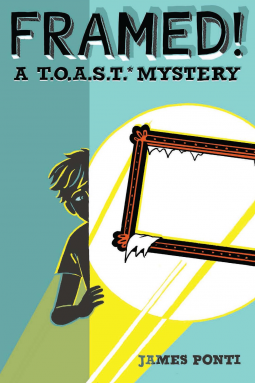
Title: Framed! Author: James Ponti Genre: mystery Similar books: The Great Shelby Holmes by Elizabeth Eulberg The Black Dragon by Julian Sedgwick Rating:
a great kid's mystery
Summary (provided by publisher): Get to know the only kid on the FBI Director’s speed dial and several international criminals’ most wanted lists all because of his Theory of All Small Things in this hilarious start to a brand-new middle grade mystery series. So you’re only halfway through your homework and the Director of the FBI keeps texting you for help…What do you do? Save your grade? Or save the country? If you’re Florian Bates, you figure out a way to do both. Florian is twelve years old and has just moved to Washington. He’s learning his way around using TOAST, which stands for the Theory of All Small Things. It’s a technique he invented to solve life’s little mysteries such as: where to sit on the on the first day of school, or which Chinese restaurant has the best eggrolls. But when he teaches it to his new friend Margaret, they uncover a mystery that isn’t little. In fact, it’s HUGE, and it involves the National Gallery, the FBI, and a notorious crime syndicate known as EEL. Can Florian decipher the clues and finish his homework in time to help the FBI solve the case?
My opinion:Framedhas definite Sherlock Holmes influences. While Ponti never uses the term "deductive reasoning", Florian's TOAST method is similar - observe small details and logically infer what the combination of these details might mean. It is, perhaps, and oversimplification of deduction, a method easily learned and masterfully applied by Margaret in a matter of weeks, but accessible to the readers. It's a fun read with a notable level of tension and action but not so much as to overwhelm young readers. The exploration of the art world is a nice touch as well. I would easily recommend it for any 4th-6th grader as Florian never comes to real physical harm. Advanced Reader Copy provided by NetGalley.
Before I get into the details of my comparison I want to be clear: I watched the original 1974 film adaptation, not Disney's 2003 remake. If you've seen the Disney version I'd love to know how it compares. Feel free to share your opinion in the comments.
For the most part, this is a pretty faithful adaptation of the book. While small details frequently deviate from the book this is often the case with movies. The spirit of the story remains the same, with one significant exception. The big coon hunt is a much shorter scene in the film than the book and has a vastly different ending, giving Billy more of a moral victory and imparting a life lesson rather than the literal victory in Rawls' original story. It's a slow moving story, both on the page and on the screen, but the movie lacks much of Billy's internal journey. Without the monologues on sportsmanship, the relationship between a boy and his dog, and the nature of God, there is surprisingly little to this story. It plays well on screen, though, especially if one can handle the rather cheesy soundtrack.
Kids Get Coding: Learn to Program by Heather Lyons The title to this one might be a touch misleading as the reader who completes this book won't actually be able to do any programming to speak of. This is more an introduction to the concept of programming, the ideas behind it, than any sort of practical manual. That being said, it is quite accessible. Concepts are presented in an easy to understand manner with clear examples. And I was impressed by the scope of programming languages mentioned and the section on picking the right language for the job. Given it's brief length, it is a solid introduction.